Books/Essays/Exhibitions/Sounds/Contact/About

THE MILITANT HISTORIAN (BLOOMSBURY)
This is the first wide-ranging analysis of Alain Badiou’s use, development and transformation of the concept of history. Despite the wealth of perspectives now available on how social and cultural practices take shape, historicism still appears to be the most dominant. The Militant Historian examines this primacy and reveals how Badiou’s work offers a radical riposte.
Exploring key texts in Badiou’s oeuvre and how his philosophical ideas disrupt dominant conceptions of history and the role of the historian, Kerry William Purcell addresses how these ideas could transform our approaches to the historical and what it means to ‘do history’ as a meaningful endeavour. Adopting a chronological approach to Badiou’s work, each chapter explores specific conceptual developments in his writing and how they lend themselves to a reconsideration of the subject who speaks history. From these new and disruptive modes of doing emerges the figure of the militant historian – a role with the potential to impact how we practice history outside the narrow strictures of academic life. More here…
REVIEWS
‘Purcell’s engaging book calls for a transformation in our understanding of history in the light of Badiou’s philosophy of the event. It makes a highly original contribution to the reception of Badiou’s work and offers a timely questioning of historiography and the professional activity of historians.’
Ian James, Professor of Modern French Philosophy and Literature, University of Cambridge, UK
This is an original and timely study of the concept of history in Alain Badiou’s opus. Its meticulous analysis and compelling revalorisation of this crucial, but neglected aspect of his thought is enriched by a wide-ranging consideration of the philosophical and political influences that shaped it.
Damian Catani, Senior Lecturer in French, Birkbeck University, UK

JOSEF MÜLLER-BROCKMANN (PHAIDON PRESS)
One of Switzerland’s most important graphic designers, Josef Müller-Brockman (1914–1996) is the father of functional, objective design and an influential figure for generations of graphic designers around the world. He was a proponent of the grid system, which provides an underlying structure to graphic work, and he created many of the twentieth century’s most significant and memorable posters. His influence on the world of graphic design is immeasurable and his life and work will be presented in this volume for the first time in comprehensive monograph form, with an authoritative text by Kerry William Purcell, author of Phaidon’s Alexey Brodovitch, and over 400 images, ranging from finished works and design drafts to personal photographs.
REVIEWS
“One of graphic design’s most influential figures… A fitting tribute to the father of the grid.”—Creative Review
“Studies like Purcell’s are the rarest of all design books… A long, continuous, engagingly written account of Müller-Brockmann’s entire career. There have been a handful of graphic desgn books like this in the last decade… Knowing about Müller-Brockmann […] is part of being a well-educated, historically aware designer.”—Design Week
“Not only introduces us to many of his works […] but engages with another set of questions: those of influences, of the social and political environment(s) of the time… A great book.”—Grafik
“One of the most significant voices of twentieth-century graphic design, […] Müller-Brockmann is perhaps best known as graphic design’s leading proponent of the grid… With a combination of final design images, sketches, production drawings and unused design drafts from Müller-Brockmann’s archive, all with detailed captions, this book provides a complete visual understanding of this prolific designer’s oeuvre.”—Ampersand (D&AD members magazine)
“Well-researched… Provide[s] a historical and professional context, in addition to broadening Müller-Brockmann’s own self-abridged personal and creative narrative… It is illuminating to find rarely seen illustration, exhibition and set design works… Müller-Brockmann’s achievement: a defensible claim to be the twentieth-century’s most influential visual artist.”—Eye (The International Review of Graphic Design)
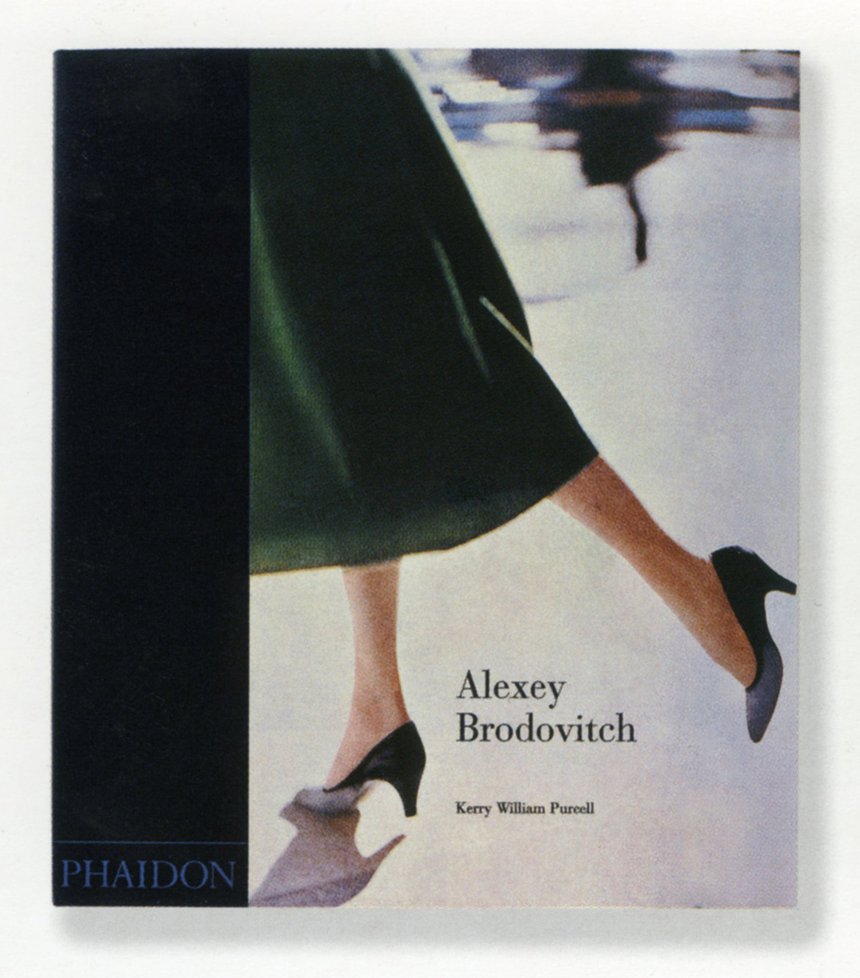
ALEXEY BRODOVITCH (PHAIDON PRESS)
Alexey Brodovitch (1898-1971) is a legend among graphic designers. A Russian who fled the Bolshevik Revolution to settle eventually in Paris and then New York, Brodovitch was one of the pioneers of graphic design in the twentieth century.
Brodovitch was Art Director of Harper’s Bazaar for over two decades (1934-58); he designed and produced several exquisite and highly collectable books with collaborators such as Richard Avedon and André Kertész; he was a talented photographer himself; and, through an informal class called the Design Lab in New York, he trained a younger generation of photographers and designers who went on to become famous artists and art directors in their own right.
REVIEWS
[…] Alexey Brodovitch by Kerry William Purcell collects innovative work by the Harper’s Bazaar art director that triggered a new graphic era.”—Vogue
“Brodovitch was a one-man visual revolution, and Alexey Brodovitch, a gorgeous new book from Phaidon by Kerry William Purcell, lays out the history.”—Vanity Fair
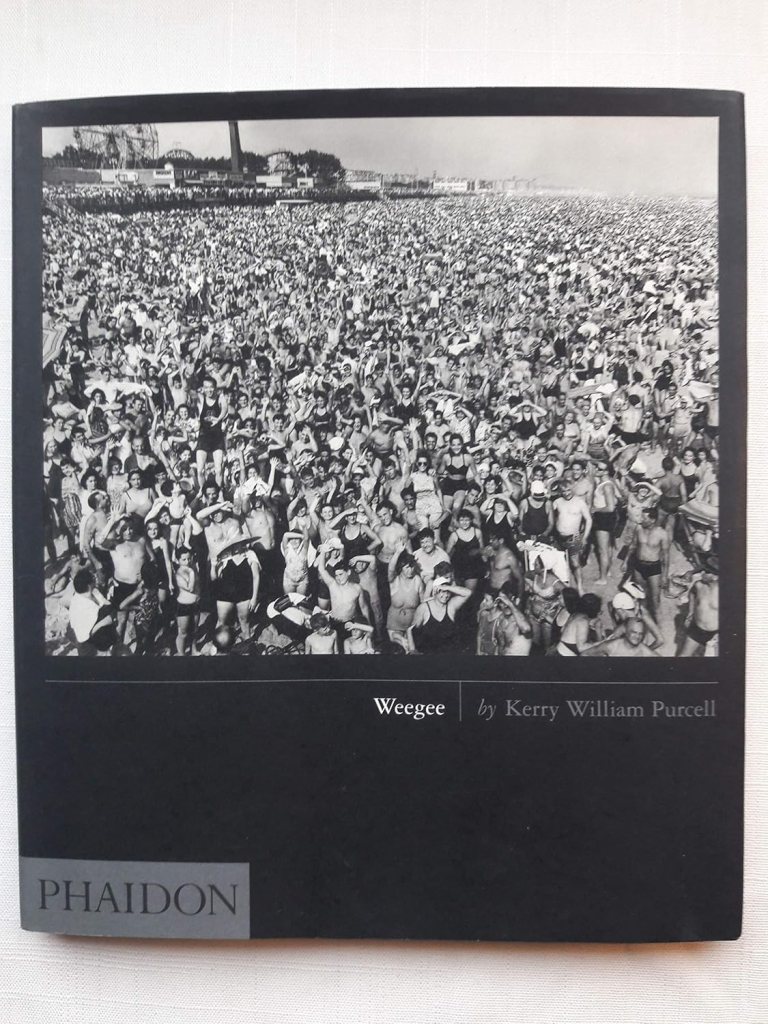
WEEGEE (PHAIDON PRESS)
This definitive monograph on the enigmatic and eccentric photographer Weegee is a collector’s item in itself. Weegee (1899-1968), known for his harrowing and poignant photographs of crime scenes in 1930s and 40s New York, is considered to be the archetypal tabloid photographer of the twentieth century.
Preferring to photograph under the cover of night, Weegee was known for his aggressive use of flash and his photographic eye was unstoppable: drawn to the grotesque, the illicit and the illegal. Named after the ‘Ouija’ board for his uncanny ability to arrive at the crime scene before the police, Weegee recorded the dark side of New York’s streets for years, becoming a prolific photographer. No sordid crime seemed to escape his flash and no crime was too gruesome to capture on camera for the papers the next day.
Weegee’s nuanced understanding of people’s simultaneous repulsion and attraction to vivid photographs of crimes of passion, murder and brutal accidents reveals him to have been far ahead of his time. Even today his photographs tirelessly retain the power to stun and to seduce: the originality of the images has elevated them in importance far beyond their use in the newspapers. More here…

BALLET (ERRATA PRESS)
Published in 1945, Alexey Brodovitch’s Ballet is easily among the most legendary photobooks of the twentieth century: the first and only book he authored as photographer, it was printed in a small run of a few hundred copies, and quickly became a rarity. A Russian émigré in 1920s Paris, Brodovitch began his career as a scene painter for Diaghilev’s Ballet Russes, and had firmly established himself as a leading art director and graphic designer in New York when he began photographing the Ballets Russes de Monte Carlo in the mid-1930s. Shot on 35 mm film, Brodovitch’s images radically disregard conventions of “good” technique; blurred and fast-paced, they capture the motion and spirit of dance both in rehearsals and on stage. With an essay by Kerry William Purcell, this publication reproduces every page of this groundbreaking work. More here…

SELF PROMOTION (LARS MULLER)
Self-Promotion features a compilation of posters the Museum für Gestaltung Zürich has commissioned over the years to promote their own exhibitions. Ever since the 1910s, Zurich’s Kunstgewerbemuseum – founded in 1875 and known today as the Museum für Gestaltung Zürich – has been focusing on producing high-quality posters. They serve to project the museum’s visual identity into the public space while at the same time documenting the variety of themes represented. The posters’ high recognition factor is achieved not through rigid corporate design but by means of graphical quality, versatile design approaches, and meticulous printing. The collection can be regarded as a brief history of both Swiss poster and Swiss graphic design. It ranges from the pictorial scenes used in the 1920s and the graphic and typographic solutions following the lead of the Russian Constructivists to the Swiss Style, which dominated the Swiss cultural poster until the 1960s, and more experimental approaches from the 70s onwards. With essays by Christian Brändle, Kerry William Purcell, Corinna Rösner
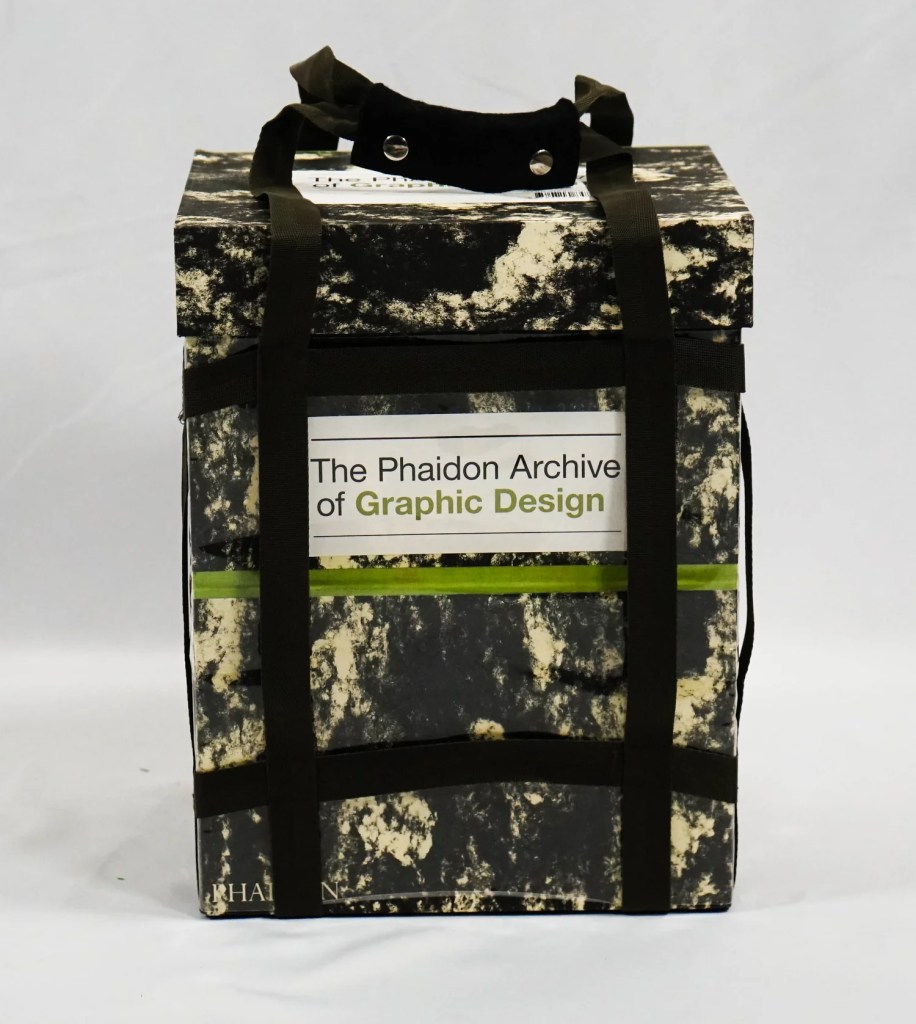
THE PHAIDON ARCHIVE OF GRAPHIC DESIGN (PHAIDON PRESS)
The book features over 500 of the most iconic graphic designs from the beginnings of mechanical reproduction to the present day. Arranged in chronological order, the designs are accompanied by texts and illustrated with a range of imagery – including rarely seen historical, contextual and archival material – to shed light on their origin and development. Co-edited by Kerry William Purcell and Phaidon Press
 Kerry William Purcell